
Work permits for students
I’m an international student in Canada. Can I work while studying?
You may be eligible to work in Canada while studying, if your study permit includes a condition that says you can work on or off campus. You must also meet all the other requirements. You can only start working in Canada when you start your study program. You can’t work before your studies begin.
Work on or off campus
As a study permit holder, you may be able to work on-campus or off-campus without getting a work permit. Make sure you meet the requirements before you find a job.
Work as a co-op student or intern
You will need to get a work permit if your study program includes a required co-op or internship placement. Find out how to apply for a co-op work permit.
Work after you graduate
You may also be able to apply for a post-graduation work permit (PGWP) to continue working in Canada after you graduate. Find out if you’re eligible for a PGWP.
As an international student, can I work in Canada without a work permit?
Yes. You have to respect the conditions associated with your situation.
If you have a study permit and are enrolled full-time in a designated learning institution (DLI)
You may work on campus without a work permit if you have a study permit and are enrolled full-time in a designated learning institution.
If you have a study permit and are enrolled full-time in an academic, professional or vocational training program at a DLI
You may work off campus without a work permit if your study permit says that you can work off campus. In most cases, you’re allowed to work
- for up to 24 hours while class is in session
- unlimited hours during scheduled breaks
If you want to take part in a co-op or internship program
You must have the appropriate work permit to take part in a co-op or internship program.
If you want to work after your studies
You may apply for a post-graduation work permit (PGWP) to work in Canada after your studies. If you’re not eligible for a PGWP, you may still be able to work in Canada after you graduate.
I’m an international student. Can I work before my study program starts?
No. If you’re eligible to work on or off campus while studying in Canada, you can only start working once your study program starts.
Make sure you meet all the requirements for working on campus or off campus, before you start working. If you want to work before you start your studies, you must apply for a work permit.
I’m an international student. Can I continue to work after I’ve finished my study program?
Generally, no. You must stop working once you’ve received one of the following:
- your official letter of completion
- your transcript
- an email from your institution telling you that you have completed your program
You can only continue to work after you finished your studies if either
- you applied for a work permit before your study permit expired, or
- you’re starting a new study program
Find out more about working after you complete your study program.
Can I have a work permit and study permit at the same time?
Yes. You can apply for an additional permit. However, you must
- be eligible for both permits
- show the officer that you can study and work at the same time
When you apply, include a letter to explain how you’ll do this. Give details about how you’ll balance your work schedule with your studies. If you apply online, upload this letter in the Client information part of your document checklist.
Workers who can study without a study permit
You may be eligible to study without a study permit if you are in either of the following situations:
- You have a valid work permit that was issued on or before June 7, 2023.
- You must have been issued a letter on or before June 7, 2023, authorizing you to work while we process your work permit application.
- You can use this letter if you’re waiting for a decision on your work permit extension.
Eligibility for other programs
There are some things to know about holding 2 permits:
- The work experience you gain while you hold a study permit doesn’t count toward the work experience requirements for most permanent residence programs.
- Check the requirements for your program before you apply for permanent residence.
- If you plan to apply for a post-graduation work permit when you complete your studies, you’ll need to meet the eligibility criteria.
- For example, you must maintain full-time status during all semesters of your study program, even while working.
See who can apply for a work permit and who can apply for a study permit.
As an international student, can I take part in student work placements, such as co-ops or internships?
Post-secondary students
Yes, you can participate in student work placements if
- you’re a post-secondary international student studying full-time at a designated learning institution, and
- your study program includes student work placements as part of your curriculum
Learn more about who is eligible for student work placements.
Secondary students
If you’re an international student at a designated learning institution at the secondary level, you need a co-op work permit to participate in student work placements.
Learn more about who’s eligible for co-op work permits.
There’s a specific employment location on my co-op or post-graduation work permit. Can I work somewhere else?
It depends on where the employment location information is on your work permit.
If the location is under Additional Information
You can work in any location across Canada. You don’t need to apply to change your work permit. If you have a co-op work permit, your work must be required to complete your study program.
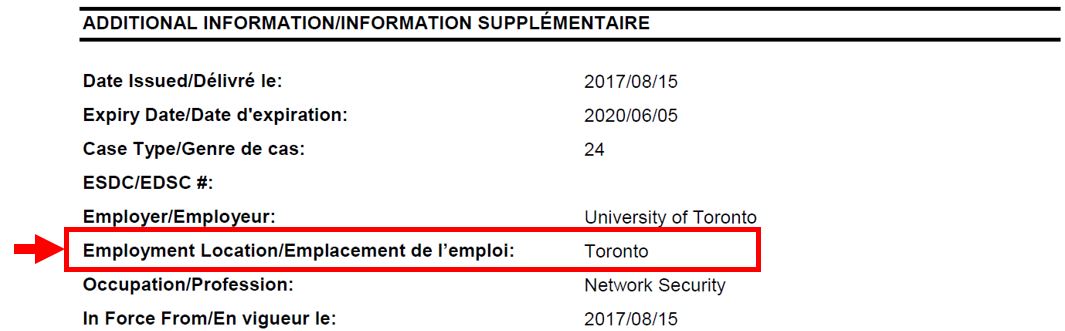
Figure 1. Employment location information under the “Additional Information” section of a sample work permit.
If the location is under Conditions or Remarks/Observations
You must work at the location on your permit. You must apply to change the conditions of your work permit if you want to work in a different location. To do this, you’ll need to apply for a new work permit from within Canada. Select “Inside Canada” to find out how you can apply for your new permit. Include a letter explaining why you need the condition removed from your work permit with your application.
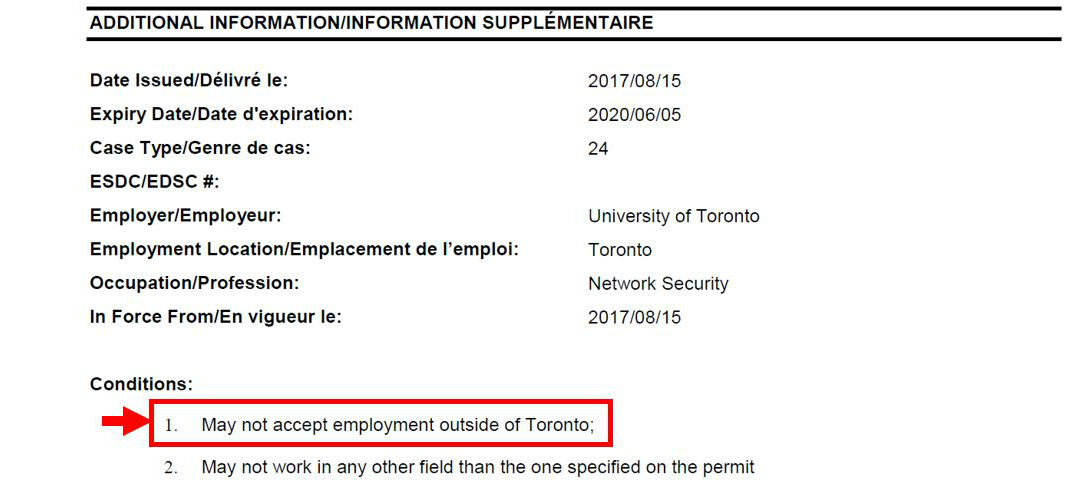
Figure 2. Employment location information under the “Conditions” section of a sample work permit.
There’s a specific occupation on my co-op or post-graduation work permit. Can I work in a different field?
It depends on where the occupation information is on your work permit.
If the occupation is under Additional Information
You can work in any field. You don’t need to apply to change your work permit. If you have a co-op work permit, your work must be required to complete your study program.
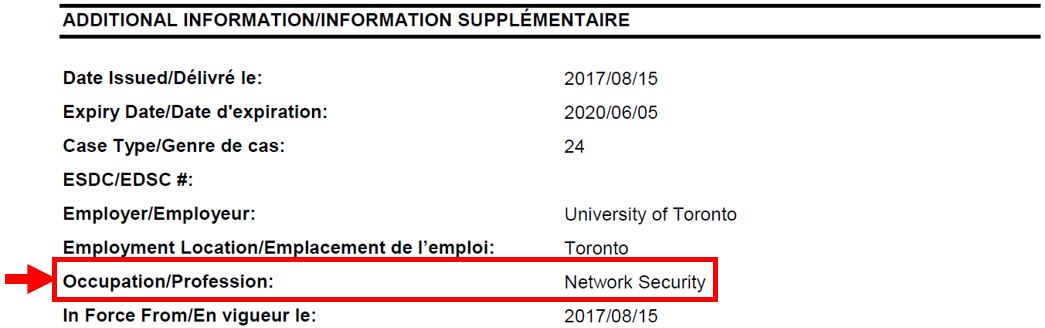
Figure 1. Occupation information under the “Additional Information” section of a sample work permit.
If the occupation is under Conditions or Remarks/Observations
You must work in the field listed on your permit. You must apply to change the conditions of your work permit if you want to work in a different occupation. To do this, you’ll need to apply for a new work permit from within Canada. Select “Inside Canada” to find out how you can apply for your new permit. Include a letter explaining why you need the condition removed from your work permit with your application.
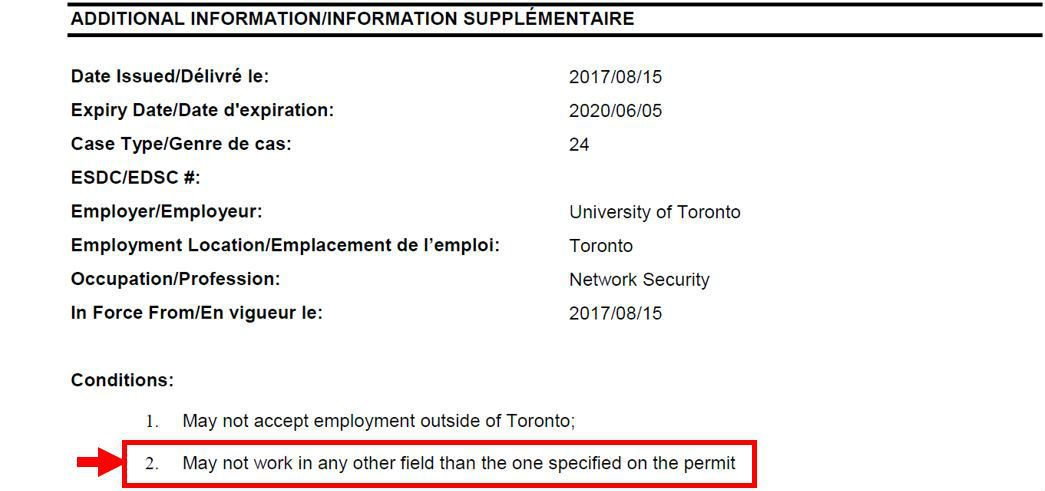
Figure 2. Occupation information under the “Conditions” section of a sample work permit.
My co-op work permit says “not authorized to work for any employer other than stated”. What does it mean?
Changes to co-op work permit requirements for post-secondary international students
As of April 1, 2026, you don’t need a co-op work permit for student work placements, such as co-ops or internships, as a post-secondary international student.
Secondary students still need a co-op work permit to participate in student work placements.
As a co-op student, your co-op work permit might say
- you’re “not authorized to work for any employer other than stated”
- your school is your employer
This is to identify you as a co-op student. It means you can work for any employer that’s accepted by your school’s co-op program.
If your employer doesn’t understand this condition
If the condition on your work permit is causing problems for you with your employer, you may apply to remove the condition.
To do this, you must apply for a new work permit.
Include a letter explaining why you need the condition removed from your work permit (that is, it’s causing problems with your employer) with your application.
There is no fee for this.
If you change schools
If you’re in a post-secondary co-op program and you change schools or student work placements, you don’t need to apply for a new co-op work permit.
Learn more about student work placements.
Can I continue to work during scheduled school breaks?
Generally, yes. Your study permit must still be valid and you must still meet all the requirements.
If you work off campus
You can work full-time during scheduled breaks, like over summer holidays and during spring break. You must meet all the requirements for working off campus before you start working. Once your school year restarts, you can only work a maximum of 24 hours per week.
If you work on-campus
You can work full-time during scheduled breaks, like over summer holidays and during spring break. You must meet all the requirements for working on-campus before you start working.
Can I work in any type of job if I am eligible to work off campus?
Yes. You may work for any employer in Canada who is not on the ineligible employer list, as long as you continue to comply with the requirements of the off-campus work authorization. You must also get an immigration medical exam if you plan to work in certain occupations.
Can I work as many hours as I want if I’m eligible to work off campus?
No. If you're eligible to work off campus, you can work up to 24 hours per week while classes are in session. During scheduled breaks, such as summer and winter holidays, or a reading week, you're allowed to work unlimited hours.
You can start working in Canada only once you've started your study program. You can't work before your studies begin.
What is considered a scheduled break
A scheduled break
- must be scheduled by your school, and
- must last at least 7 consecutive days
- For example, if an academic break is for a week (including the weekend), you're allowed to work unlimited hours for those 7 consecutive days.
A statutory holiday on its own, such as Labour Day, is not a scheduled break.
- A statutory holiday that creates a long weekend, for example, is also not a scheduled break by itself.
If a statutory holiday falls within an existing scheduled break (with 7 consecutive days), the rules for working unlimited hours would apply.
Scheduled breaks longer than 150 days
If your school has back-to-back scheduled breaks, creating a break period longer than 150 consecutive days, you can only work off campus during the first 150 consecutive days.
You cannot work for the entire break if it's longer than 150 consecutive days.
Maximum days per year for unlimited off campus work
Taking into account all regularly scheduled breaks, you can only work unlimited hours off campus for a total of 180 days during each calendar year.
- Date modified: